
How to Search Civil Dockets
Search ARCourts is the free public case-information route for many Miller County civil dockets. If you know the full court-assigned number, use case search. Keep the punctuation exactly as printed on the notice. No number? Use participant search for a person or organization. Advanced fields can narrow the county, court location, case type, status, or date. Those controls do not always appear.
Check the court and the case description before trusting a match. Texarkana sits in two states. A Miller County civil case is not the same as a Texas filing. A sound docket search follows these steps:
- Decide whether the matter belongs to Circuit, District, small claims, probate, or another court file.
- Enter the full case number, or search the participant or organization name.
- Apply Miller County and the correct court-location filters.
- Open the match and read filings, service, motions, settings, orders, and outcome in order.
- Request the signed or certified paper from the clerk that holds the case.
Miller County Civil Docket Routes
Circuit Court holds general jurisdiction over major civil and domestic-relations matters. The Miller County Circuit Clerk keeps those files. District Court is more limited. It covers contracts, personal-property damage, and recovery of personal property up to $25,000. Its small-claims division reaches $5,000. The claim type and amount point you to the first docket to search.
| Local route | Civil docket | Record keeper |
|---|---|---|
| Circuit Court | General civil and domestic-relations cases | Miller County Circuit Clerk |
| District Court | Limited contracts and personal-property matters | Relevant District Court clerk |
| Small claims | Claims within the statutory small-claims ceiling | Relevant District Court clerk |
| Probate custody | Decedent-estate instruments and protected adoption or guardianship holdings | Miller County Clerk |
A transfer or appeal can create a new entry and a new number in the destination court. When the history shows the matter moved, search both levels of the Miller County court docket.
What a Civil Docket Shows
A Miller County civil docket opens with its case header and public participants. It then lists dated Docket Entries. The portal can identify public lawyers, party roles, filing dates, event descriptions, and some document links. Use the exact court-assigned case number. There is no reliable county code pattern to lean on.
| Case Header | Case number and description, court, case type, filed date, broad status, and assigned judge. |
|---|---|
| Participants | Public plaintiff, defendant, petitioner, respondent, intervenor, alias, and attorney data where used. |
| Docket Entries | Filing Date, Description, Docket Detail, Name, and any public Documents link. |
| Procedure | Complaint, summons, service return, answer, motion, notice, hearing, order, trial, and judgment events. |
| Later Activity | Dismissal, post-judgment writ, satisfaction, transfer, reopening, or appeal when entered and public. |
The events index does not promise a downloadable copy of every filing. Protected family, minor, medical, financial, or sealed content may be redacted or withheld.
Miller County Civil Party Searches
Organization searches can be trickier than personal-name searches. Search ARCourts may require the organization exactly as the filing court entered it. Official training also suggests placing one or two distinctive organization words in the Last Name field. Do that when the organization control gives no useful match. Before opening a result, confirm the case style, court, and filing date.
Name length matters. One or two characters in a first or last name seek an exact match. Three or more can return exact or partial hits. Results can be sorted or filtered by columns. They can be shown in pages of 25, 50, or 100 rows. Those controls help separate similarly named Miller County civil parties without guessing.
Types of Civil Cases on the Docket
Miller County civil dockets span more than one claim type. Court level stays part of every search. Circuit records include general civil and domestic-relations cases. District civil jurisdiction is narrower, and small claims carries its own lower ceiling. Probate-related instruments sit with the County Clerk. That creates a separate route for those court records.
- General contract, property, damage, and other major civil actions in Circuit Court
- Domestic-relations petitions and orders where docket facts are public
- District contract and personal-property matters within its jurisdiction
- Small-claims cases within the statutory limit
- Decedent-estate probate instruments kept through the Miller County Clerk
Adoption is confidential, and guardianship can contain protected facts. An online absence does not prove that no such proceeding exists.
Miller County Civil Docket Clues
Two pairs of entries get misread often. A summons issued event means the court generated process; it does not prove service was completed, so look for a return or service entry and read what it says. The same caution applies to motions. A filed motion proves only that a party asked for a ruling, not that the judge granted it. Find the corresponding order.
Match each step to its proof. Summons issued is followed by service or return; a motion is followed by an order; a setting may be followed by a later reset.
Read this way, entry by entry, a Miller County civil docket will not be mistaken for a final judgment before the case reaches one.
Settings and Hearings on Civil Dockets
Miller County posts no separate daily public calendar portal. The working chain starts with Search ARCourts events. It runs through notices served in the case, the assigned division, the clerk, and any docket posted at the courthouse. Find the newest setting notice. Then read every later entry for a reset, continuance, order, cancellation, dismissal, or disposition.
Filing and hearing dates are not the same thing. A recently filed notice can set a hearing weeks later. If a portal date differs from a paper notice, contact the assigned division before acting. The Miller County court calendar path gives the broader setting workflow.
Miller County Civil Docket Outcomes
Outcome words mark different procedural ends. A judgment states the court's relief. A default judgment follows a failure to respond or appear under the applicable rules. An agreed judgment reflects an agreement the court entered. A nonsuit is a plaintiff's dismissal subject to the rules and order. DWOP means dismissal for want of prosecution, because the matter was not pursued as required.
- Transferred
- The matter moved to another court or docket.
- Reopened
- Later activity resumed under the case after an earlier closure.
- Satisfied
- An entry records satisfaction tied to the judgment as filed.
- Appealed
- A review path began and may create a separate appellate record.
Miller County publishes no local abbreviation list. Rely on the full displayed words, and get the signed judgment for the operative result.
Miller County Civil Judgment Copies
Think of a docket label as an index line. It rarely captures every finding, deadline, or term in the signed judgment. So when the exact result matters, write down the case number. Note the judgment entry too. Then ask the clerk for that paper itself. A portal page on your screen is no substitute for a clerk-certified copy.
The Miller County Circuit Clerk keeps the Circuit civil and domestic files. The office sits at 400 Laurel Street, Suite 109, in Texarkana. The main number is 870-774-4501. Hours run Monday through Friday, 8:00 a.m. to 4:30 p.m., except holidays. The office says it stays open through lunch. Miller County posts no plain-copy or certification prices for Circuit files, so call for a quote. Ask how copies will be delivered.
Miller County Civil Docket Timelines
Judgment does not close every file. A Miller County civil docket can keep moving afterward. It picks up writs, garnishments, satisfactions, abstracts, post-judgment motions, and notices of appeal. A transfer or reopening also hints at where the active record sits now. Read past the first judgment entry before assuming you have the latest status.
Civil flow: Complaint or Petition › Service › Answer › Motions and Settings › Order or Trial › Judgment › Post-Judgment Events
An appeal splits the record in two. The trial-court docket still shows the notice and its related filings, while the appellate court keeps its own record, so search each system for the part it holds.
Miller County Civil Docket Access
Start with Search ARCourts. No image on an entry? Call the clerk or visit. Circuit civil records stay with the Circuit Clerk at the Laurel Street courthouse. District civil and small claims go to the District Court clerk at 2300 East Street, 870-772-2780. Probate instruments sit with the Miller County Clerk in Suite 105, 870-774-1501. Call ahead about a public terminal.
Keep any written or mailed request narrow, naming the court, the full case number, the document title or entry date, the format you want, and whether certification is needed. Older or non-imaged papers may require archive retrieval. Arkansas Judiciary eFlex accepts authorized electronic filings, but it is not a public case search or document viewer.
Search ARCourts is the discovery channel. The clerk's file remains the source for an authenticated Miller County civil record.
Miller County Civil Docket Rules
Access rules come from several sources. Arkansas Supreme Court Administrative Order No. 19 governs court-record access and exclusions. Administrative Order No. 21 covers electronic filing. Arkansas Rule of Civil Procedure 5(c)(2) safeguards protected identifiers. Then comes the Arkansas Freedom of Information Act, Ark. Code Ann. § 25-19-101 et seq. It grants broad public-record access. Yet it does not displace judiciary rules or case-specific confidentiality.
The official Arkansas Code search publishes the current statutes themselves.
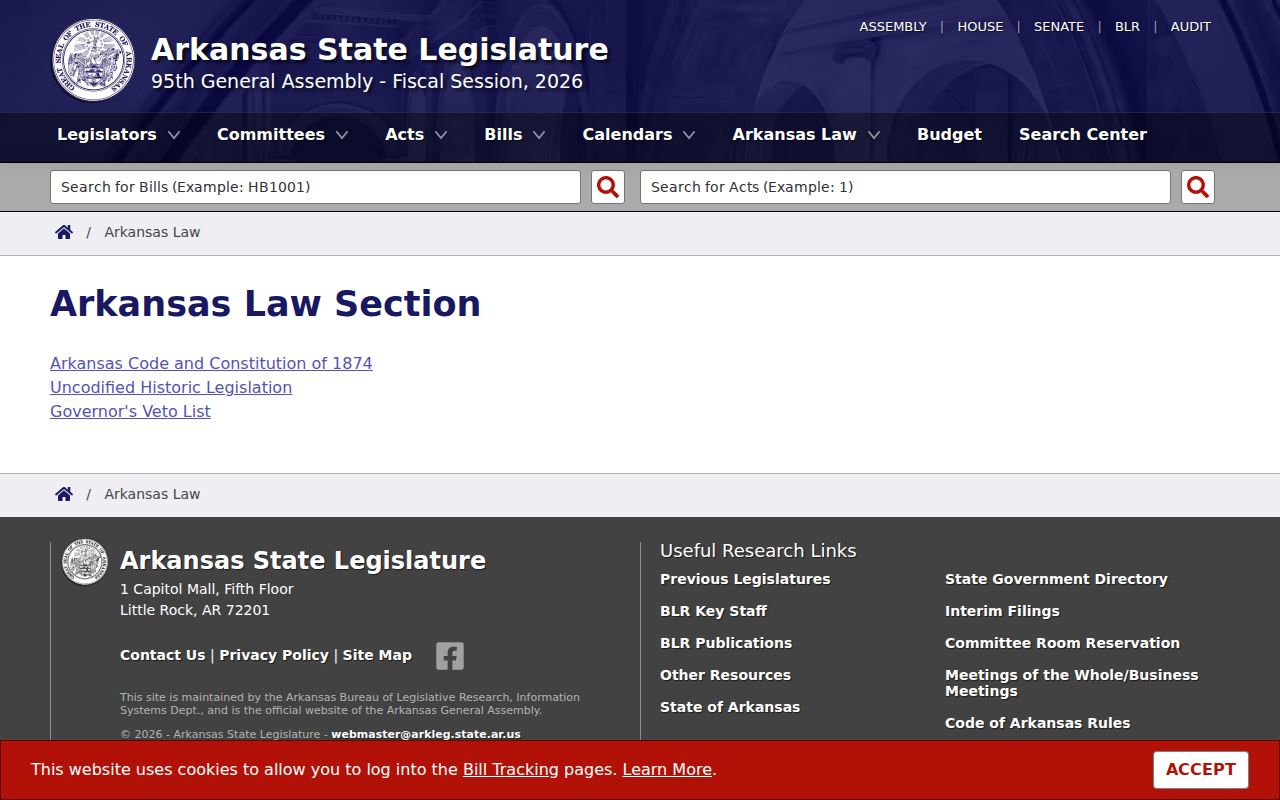
That source shows the statutes in their current form. The clerk and the court still apply the access rule to any specific Miller County civil file.
Public Access to Civil Dockets
Plenty of Miller County civil docket information is public. Access is not all or nothing, though. A family file may show a public case header while withholding medical, financial, minor, or sealed documents. Adoption records are confidential, guardianship records can hold protected content, and account numbers or other protected identifiers should be redacted rather than republished.
Access rules:
Administrative Order No. 19 governs access, exclusions, and compiled Arkansas court information.
Arkansas court rules supply filing and redaction safeguards for protected data.
Miller County transparency information is a county fallback, but court case requests still belong with the custodian clerk.
A missing case is not always sealed. Verify the Arkansas county, the spelling, the filing year, and the court level before assuming anything. Then contact the keeper. Staff can release only what the governing law and court orders permit.